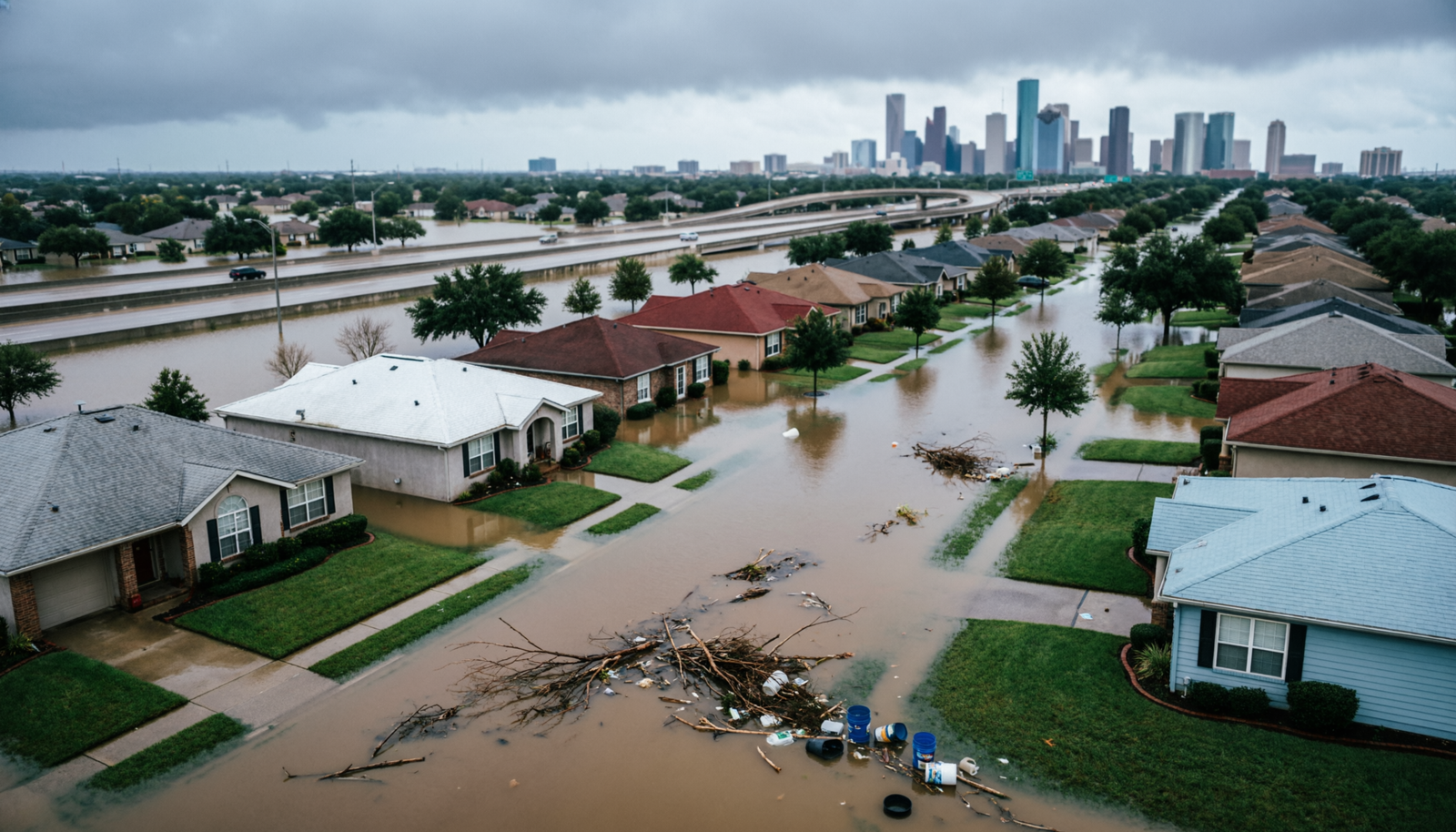
Houston is flat, crisscrossed by bayous, and prone to heavy rain. Since Hurricane Harvey in 2017, flood risk has become part of nearly every home-buying conversation here. Researching it does not mean avoiding Houston; it means buying with clear eyes. Here is a practical process to follow, along with what to know about the region’s clay soils and foundations.
This article is general information, not legal, insurance, or engineering advice. Always confirm details for a specific property with the appropriate licensed professional.

Start with the flood zone, but do not stop there
Look up the property’s address on the FEMA Map Service Center to see its official flood zone. The Harris County Flood Control District also offers its Flood Education Mapping Tool, an easier-to-read view of mapped floodplains. The county is clear that its tool is not the effective flood map, so your lender or insurance agent can provide an official flood zone determination.
Just as important, floods can and do occur outside mapped high-risk zones. A favorable flood zone is a good sign, not a guarantee, which is why history and elevation matter.
Ask about the property’s flood history
Read the seller’s disclosure notice carefully. It includes questions about flooding, flood zones, and insurance claims, and any answer that is unclear deserves a follow-up question. You can also ask whether the seller has filed flood insurance claims or received disaster assistance, and whether repairs were made afterward. Neighbors can be a helpful source of local knowledge, and your inspector may notice signs of past water intrusion, such as staining, repaired drywall, or replaced flooring.
Elevation and drainage matter
An elevation certificate, when one is available, shows a building’s elevation relative to the base flood elevation and is commonly used by insurers to price a policy. Beyond the paperwork, walk the lot. Notice how it sits relative to the street, where water would go during heavy rain, and how the grading, gutters, and drainage are handled. Take note of the nearest bayou, creek, or detention pond as well.
Get an insurance quote early
Flood damage is not covered by a standard homeowners policy, so flood insurance is a separate decision. Premiums vary widely based on a property’s location, elevation, and construction, and the cost belongs in your monthly housing budget. Policies through the National Flood Insurance Program generally carry a 30-day waiting period before coverage begins, though there are exceptions when a policy is required in connection with a mortgage closing. Private flood policies are also available.
Request quotes from a licensed insurance agent while you are still deciding, not after you have committed.

Understand Houston foundations
Much of the Houston area sits on expansive clay soil that swells when wet and shrinks when dry, which can move a slab foundation over time. Some movement is common and does not automatically make a home a poor purchase, but it should be investigated. Common warning signs include:
- Doors and windows that stick or no longer latch properly
- Cracks in drywall, especially above door frames and window corners
- Gaps between walls and ceilings, or between trim and walls
- Sloping or uneven floors
- Widening cracks in exterior brick or mortar joints
Hairline cosmetic cracks are common in any home. Larger cracks, cracks that are widening, or clusters of related symptoms deserve a professional look. If your general inspector raises concerns, consider a structural engineer’s evaluation, and ask the seller for records of any prior foundation repair, including any transferable warranty.
Make the most of your option period
In Texas, buyers commonly negotiate an option period: a set number of days, in exchange for a fee paid to the seller, during which you may terminate the contract for any reason. This is your window to complete inspections, research flood history, and obtain insurance quotes. Schedule inspections right away, use the results to negotiate repairs or price where appropriate, and make your decision with the full picture in hand.
A quick buyer checklist
- Look up the flood zone on FEMA’s map service and the county’s mapping tool.
- Read the seller’s disclosure carefully and ask follow-up questions.
- Request flood insurance quotes early.
- Ask whether an elevation certificate is available.
- Walk the lot and study the drainage.
- Book a full home inspection, plus a structural evaluation if needed.
- Ask for foundation repair records and any warranties.
Buy with confidence
Every property is different, and a careful process protects you far better than a rule of thumb. If you would like help researching a specific address, I am happy to walk through it with you. Learn more about working with me on the Buy a Home page, read our guide to choosing a Houston neighborhood, or get in touch directly.