Short answer: Houston’s urban development is being shaped by a handful of durable trends — mixed-use “live-work-play” districts, dense infill development inside the Loop, suburban town centers that function like mini-downtowns, and a continued build-out along transit and major employment corridors. For buyers and investors, these trends point toward neighborhoods that are changing in character, and changing in value, faster than the city as a whole.
Why urban development trends matter to buyers, not just planners
Where a city is investing in infrastructure, retail, and new housing stock tends to predict where values rise over the next decade — often well before it shows up in headline price data. Understanding these patterns gives buyers and investors a way to look past today’s listing and ask a more useful question: what will this neighborhood look like in five or ten years?
Mixed-use “live-work-play” districts keep expanding
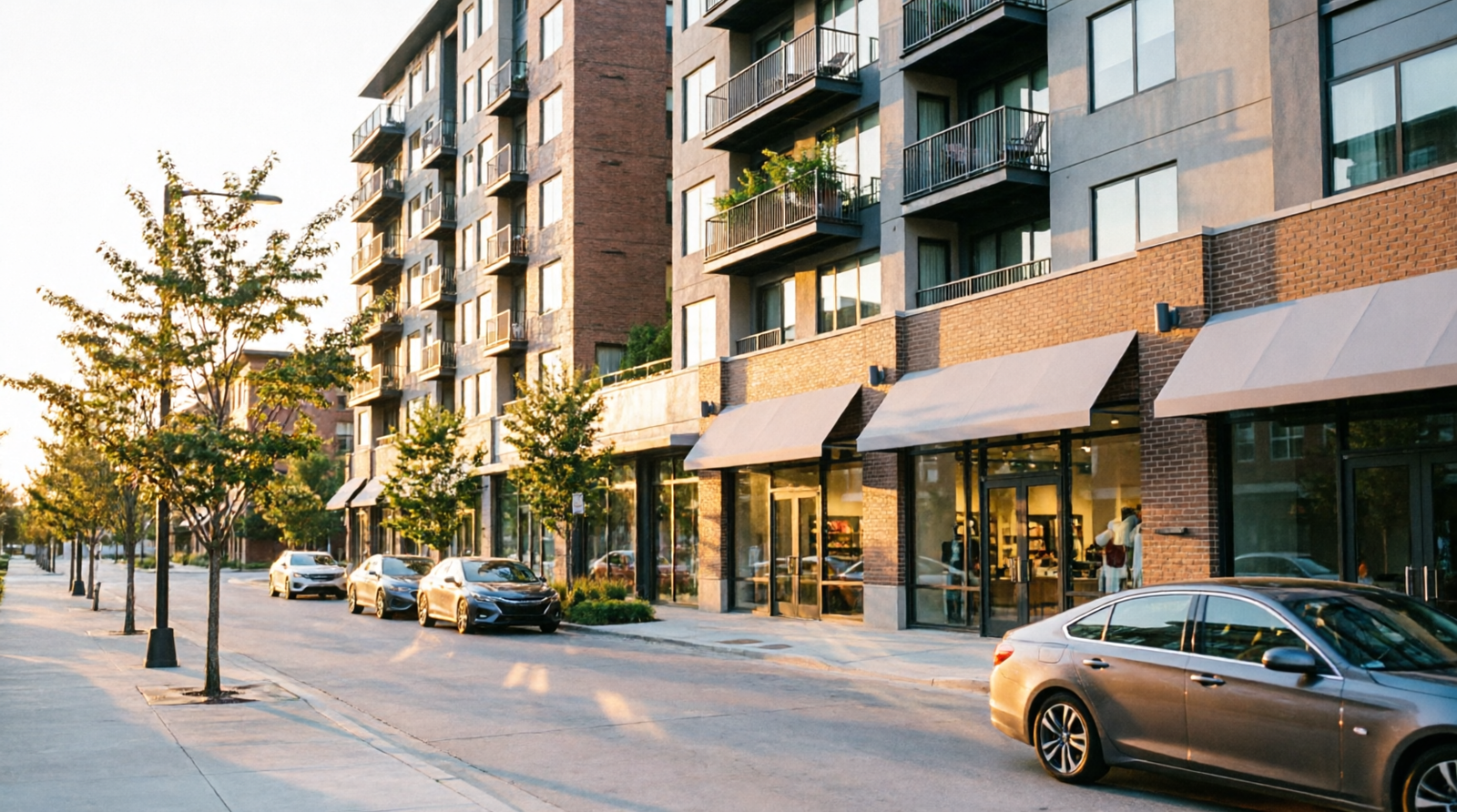
Houston has leaned heavily into mixed-use development — walkable districts that combine housing, retail, dining, and office space in one footprint. These areas tend to command a premium because they reduce dependence on a car for daily errands, something increasingly valued by younger buyers and empty-nesters alike. Areas built around this model have generally outperformed purely residential subdivisions in both appreciation and rental demand.
What does “mixed-use” actually mean for a buyer?
In practical terms, it means a property near or within walking distance of restaurants, shops, and often a park or green space — rather than a purely residential pocket requiring a drive for everything. Buyers researching a neighborhood should look at what’s being built around it, not just what’s already there.
Infill development inside the Loop
With little zoning to restrict it, Houston has seen aggressive infill development — older, often smaller homes replaced with townhomes or larger new builds on the same lot. This has reshaped the character of many inner-Loop neighborhoods over the past decade, and it tends to accelerate once a handful of new builds appear on a street, signaling to builders and buyers alike that the area is turning over.
The neighborhoods worth watching aren’t always the ones already finished changing — they’re the ones in the middle of it.
Suburban town centers are becoming their own destinations
Master-planned suburban communities increasingly include their own retail cores, office space, and entertainment — reducing the need to drive into central Houston for daily life. This trend has made several suburban areas attractive to both families and investors who want suburban affordability without sacrificing the conveniences typically associated with urban living.
Growth along transit and major employment corridors
Areas near major employment hubs — the Energy Corridor, the Texas Medical Center, downtown — continue to see steady demand, since commute time remains one of the biggest quality-of-life factors for Houston buyers. New development tends to cluster along these corridors first, making them a reliable, if less flashy, place to watch for long-term value growth.
What this means if you’re buying or investing right now
Rather than only comparing today’s prices, look at what’s being approved, permitted, or built nearby — new retail, new schools, road or transit improvements. A neighborhood with visible momentum behind it often represents better long-term value than a neighborhood that’s already fully built out and priced accordingly.
Frequently asked questions
Which Houston areas are seeing the most urban development right now?
Inner-Loop neighborhoods undergoing infill redevelopment and suburban master-planned communities building out their own town centers are currently seeing the most visible change, though momentum shifts year to year as new projects break ground.
Does new development near a home increase its value?
Generally yes, particularly retail, dining, and transit improvements — though construction noise and disruption can be a short-term downside worth weighing against the longer-term upside.
How can I find out what’s planned for a neighborhood before I buy?
City and county planning and permitting records are public, and a knowledgeable local agent can often tell you what’s already in the pipeline for an area you’re considering — this is exactly the kind of local insight worth asking for before you commit to a neighborhood.
Where to go from here
If you’re trying to figure out which Houston neighborhoods have real momentum behind them versus which have already peaked, I’m happy to walk through what I’m seeing on the ground. Get in touch, or explore current opportunities on the Investment Advisory page.